





Anne's Blog
 RSS Feed
18
How to Spot Foundation Problems
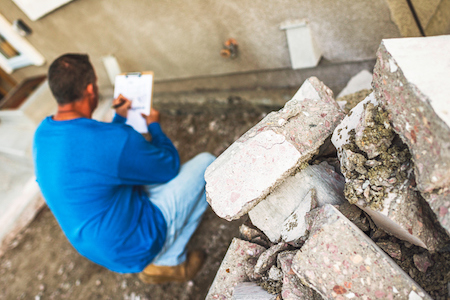
The foundation provides support for your entire house, so keeping it level and in good condition is critical to the protection of the entire structure and the safety of your family. A foundation can become damaged by a variety of problems and natural occurrences. If you notice any of these warning signs, you should have your foundation inspected as soon as possible.
Cracks
The most glaring sign of a foundation problem is cracking in the foundation, walls or floors. This can be a result of movement in the soil that causes the house to sink. Even if a crack appears small, it can indicate that there is a serious problem. This should be addressed as soon as possible.
Settling or Heaving
You may notice that the house is settling or sinking on one side. This indicates a significant foundation problem that can result in safety issues. Ignoring even a small change will only allow the problem to get worse.
Sometimes the opposite happens and the foundation moves upward. You may notice that hallways, doors or garage walls are no longer level. This problem can be caused by expansion and contraction of the soil under the house or by moisture issues.
Moisture in the Crawl Space
You may notice excessive moisture, mold and mildew in your crawl space and may smell a musty odor inside the house. This problem can be addressed by improving the drainage system.
Problems Inside the House
The floors may sag or become uneven. This can be dangerous, especially for children and people with limited mobility, because it raises the risk of falls and injuries.
You may notice that the doors are difficult to open and close or do not line up properly. While this is common after a heavy rainstorm because of moisture in the air, if it happens during dry weather, it could be a sign of an issue with the foundation. You may see gaps around the window frames or exterior doors, or you may no longer be able to lock doors"this creates obvious safety concerns.
If you notice that your cabinets and counters are separating from the walls, that is a sign of a foundation problem. Even a small amount of movement can indicate that there is a serious issue.
Have Your Home Inspected
A foundation problem is something that needs to be taken seriously. Even something that seems like a minor change can be a sign of a significant structural issue. If you notice any of these signs, contact a local contractor immediately to have your house inspected. It’s necessary to correct foundation issues quickly to avoid further problems and prevent major structural damage.
Published with permission from RISMedia.
17
When Should You Start Saving for Your Children's College Education?

If you have or plan to have children, you want them to have a bright future and to be successful and financially secure. That may mean that you hope (or expect) that they will obtain a college degree. With tuition and other costs steadily climbing every year, many parents worry that they won’t be able to afford to pay for their children’s college education.
Set Clear Priorities
Before you start saving for college, you need to get your finances in order in other areas. Make sure you have an emergency fund with enough money to cover at least three months’ worth of expenses in case you suffer an illness or injury or lose your job. It’s also important to set aside enough money for your own retirement. You won’t be doing your kids a favor if you’re too old or ill to work, don’t have enough saved to support yourself, and have to rely on them when they’re starting out in their own careers and are not yet financially secure.
Lower Current Expenses
Find ways to cut your expenditures to make room for college savings in your budget. If you have any high-interest credit cards or loans, pay them off, or at least get the balances under control before you start setting aside money for your children’s future education. Consolidating credit card balances to lower your interest rates and refinancing your mortgage or other loans can save you money each month.
Eating out less often and reducing your spending on clothing and entertainment are other ways to lower expenses. These changes could allow you to save money for college without having a major impact on your current quality of life.
Ways to Save for College
Once your own financial situation is secure, you can begin to save money for your children’s college education. The earlier you start, the better. Because of compounded interest, even a small amount, when consistently set aside each month and left to accrue interest, can grow into a sizable nest egg.
You might want to open a 529 savings account to set aside funds for college costs. You can even establish an account in your own name before a child is born and then transfer it to your child’s name later. Another option is to put money in an IRA to be used for your own retirement or for your children’s college education. Discuss your options and tax implications with a financial advisor.
Be Ambitious, but Realistic
With higher education costs soaring, the key to building a substantial amount of savings is to start early. The more you set aside, and the longer it can collect interest, the better off your children will be when they’re ready to enter college. If you can’t save as much as you would like, remember that grants, scholarships and loans may be available to help. Make your own retirement and your family’s current financial security your first priorities as you save for college.
Published with permission from RISMedia.
16
How to Optimize Smart Tech in Your Bedroom

Here are a few ways to spruce up your bedroom with the latest gadgets…
Automated Blackout Shades
Sync your shades with your sleep schedule and keep the room dark until its time to get up.
Dawn Simulation
Enjoy a dawn simulation by setting your lights to slowly turn on in the morning and wake up to a warm, gentle glow.
Smart Beds
Choose your ideal firmness on each side of the bed and drift away as it senses your movement and automatically adjusts to your sleeping position.
Dynamic Temperature Control
Set your thermostat to meet your needs and create the ideal atmosphere that warms or cools as you wake.
Published with permission from RISMedia.
15
Quick Tips to Avoid Phone Scams

Weve all experienced it: The phone rings and you dont recognize the number, but you answer anyway. The voice on the other end of the line is cheerful, knows your name, and starts asking personal or financial questions.
Some unwanted calls, such as those from telemarketers, are more annoying than harmful, but others might be scams that could lead to damaging identity theft or significant money loss.
Thats why caution is key.
To help consumers stop unwanted robocalls and avoid phone scams, the Federal Communications Commission (FCC) has provided the following tips:
Don’t answer calls from unknown numbers. If you do, hang up immediately.
You may not be able to tell right away if an incoming calls phone number is falsely disguised, or spoofed, to trick you into picking up. Be aware: Caller ID showing a local number doesnt necessarily mean its a local caller. Also, if you answer and its not who you expected, dont hang on"hang up.
If you answer the phone and the caller"or a recording"asks you to hit a button to stop getting the calls, hang up. Scammers often use this trick to identify potential targets.
Do not respond to any questions with “yes.” Scammers might be able to record and use the response as a voice signature to authorize fraudulent charges over the phone.
Never give out personal information, including account numbers, Social Security numbers, mothers’ maiden names, passwords or other identifying information, in response to unexpected calls or if youre at all suspicious.
If you get an inquiry from someone claiming to represent a company or a government agency, hang up and call the number on your account statement, in the phone book, or on the company’s or government agency’s website to verify the authenticity of the request. Youll usually get a written statement in the mail before you get a call from a legitimate source, particularly if the caller is asking for a payment.
Use extreme caution if youre being pressured for immediate payment or information.
If you have a voicemail account with your phone service, be sure to set a password for it. Some voicemail services are preset to allow access if you call in from your own phone number. A hacker could spoof your home phone number and gain access to your voicemail if you do not set a password.
Talk to your phone company about call-blocking tools it may have, and check into apps that you can download to your mobile device to block unwanted calls.
According to the FCC, unwanted calls are the government agencys top consumer complaint, and phone scams are becoming increasingly common and more creative.
So, the next time your phone rings, keep these tips in mind. Always err on the side of caution in order to protect your identity and your wallet.
Published with permission from RISMedia.


Privacy Policy / DMCA Notice / ADA Accessibility


 Corporate Office - 215 S Centerville Rd. Lancaster, PA 17603
James J Hafer - West Virginia Broker of Record
©2026 BHH Affiliates, LLC. An independently owned and operated franchisee of BHH Affiliates, LLC. Berkshire Hathaway HomeServices and the Berkshire Hathaway HomeServices symbol are registered service marks of Columbia Insurance Company, a Berkshire Hathaway affiliate. Equal Housing Opportunity.

Licensed in Maryland & Pennsylvania
Anne Perrone
353 S. Main Street, Bel Air, MD 21014
410-697-8100